
Onomatopoeia PowerPoint Lesson With Examples
Teach about Onomatopoeia with this free PowerPoint lesson. It’s designed to introduce students to the concept of onomatopoeia in English and provides lots of clear examples with images to help students understand. Below, you’ll also find a list of additional Onomatopoeia not included in this PPT, so feel free to add these to the PowerPoint if you want more examples.
Download the Onomatopoeia PowerPoint

Inside This Onomatopoeia PowerPoint
The slideshow begins with a simple explanation of what onomatopoeia is, along with clear examples such as bang, zap, snap, and boing. It then introduces students to different types of onomatopoeia, including animal sounds, sounds people make, impact sounds, water sounds, and food sounds. Each category comes with examples to help students understand how these words connect to real-life sounds.
Tips for Teaching Onomatopoeia With This PowerPoint
- Start with animal sounds – One of the easiest and most engaging ways to explain onomatopoeia is by using animal sounds. For young learners, this makes the concept fun and relatable. For example, show a picture of a dog and ask, “What sound does a dog make?” Then reveal the onomatopoeia “woof.” Repeat with other animals such as cats (meow) or cows (moo), encouraging students to copy the sounds. This approach quickly demonstrates the meaning of onomatopoeia in a way students can act out and enjoy.
- Compare with students’ native language – After teaching the English onomatopoeia, ask students to share how the same sound is expressed in their language. This often leads to lots of laughs and keeps the class engaged. For example, in English a dog’s sound is woof, but in Korean it is mong mong. Highlighting these differences makes the lesson memorable and sparks interesting discussions about how languages represent sounds differently.
Onomatopoeia Examples: Animal Sounds
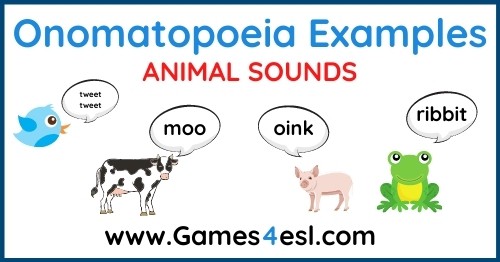
The following onomatopoeia examples are all sounds that animals make:
- Meow – the sound a cat makes
- Purr – the sound a cat makes
- Woof – the sound a dog makes
- Moo – the sound a cow makes
- Oink – the sound a pig makes
- Cock-a-doodle-doo – the sound a rooster makes
- Roar – the sound a lion makes
- Hee-haw – the sound a donkey makes
- Quack – the sound a duck makes
- Hoot – the sound an owl makes
- Chirp – the sound a bird makes
- Cluck – the sound a chicken makes
- Cuckoo – the sound a cuckoo bird makes
- Hiss – the sound a snake makes
- Neigh – the sound a horse makes
- Ribbit – the sound a frog makes
- Tweet – the sound a bird makes
- Squeak – the sound a mouse makes
- Buzz – the sound a bee makes
- Growl – the sound a dog or bear makes
- Bleat – the sound a sheep makes
- Howl – the sound a wolf makes
- Squawk – the sound a parrot makes
- Chirrup – the sound a cricket makes
- Honk – the sound a goose makes
- Bellow – the sound a bull makes
- Bray – the sound a donkey makes
- Warble – the sound a songbird makes
- Bark – the sound a seal makes
- Caw – the sound a crow makes.
Onomatopoeia Examples: Sounds People Make

The following onomatopoeia examples are all sounds that people make:
- Ahem – the sound of clearing one’s throat
- Burp – the sound after eating or drinking too fast
- Achoo – the sound of a sneeze
- Gargle – the sound of swishing liquid in your throat
- Hiccup – the involuntary sound from diaphragm spasms
- Cough – the sound when clearing the throat or due to illness
- Hum – the sound of a tune being sung without opening the mouth
- Mumble – the sound of speaking unclearly
- Chomp – the sound of biting or chewing
- Clap – the sound of striking the hands together
- Snort – the sound of air through the nose, especially in amusement
- Slurp – the sound of consuming liquid noisily
- Groan – the sound of discomfort or strain
- Moan – the sound of pain or pleasure
- Shriek – the sound of a high-pitched, piercing cry
- Sniff – the sound of drawing in air sharply through the nose
- Whine – the sound of high-pitched complaining
- Gulp – the sound of swallowing
- Belch – the sound of releasing air from the stomach through the mouth
- Grunt – the sound of exertion or effort
- Giggle – the sound of a light, often high-pitched laugh
- Sizzle – the sound of something frying or cooking
- Sigh – the sound of a long, deep breath expressing sadness or relief
- Rumble – the sound of a deep, resonating noise, like a stomach
- Buzz – the sound of a crowd talking all at once
- Cackle – the sound of a loud, sharp laugh
- Whisper – the sound of speaking very softly
- Thump – the sound of a heavy impact or heartbeat
- Snore – the sound of loud breathing while asleep
- Yawn – the sound of a deep inhale/exhale when tired or bored.
Onomatopoeia Examples: Impact Sounds
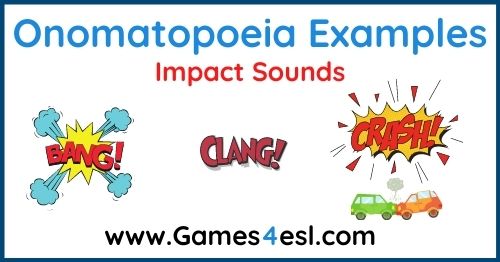
The following onomatopoeia examples are all impact sounds/collision sounds.
- Bang – the sound of a loud, sharp noise like a gun firing or something heavy hitting a surface.
- Thud – the sound of a heavy object hitting a surface without any echo or resonance.
- Clang – the sound of metal striking metal.
- Clap – the sound of hands striking together.
- Ding – the sound of a bell or a high-pitched noise indicating an alert or notification.
- Slap – the sound of a sharp strike, usually with an open hand.
- Thump – the sound of a solid, dull impact, like a heavy book falling to the floor.
- Boom – the sound of a loud, deep resonant noise such as thunder or an explosion.
- Crash – the sound of a sudden, loud, and violent collision.
- Whack – the sound of a sharp, forceful hit.
- Clink – the sound of glass or metal objects touching each other.
- Knock – the sound of striking a hard surface to attract attention.
- Tap – the sound of a light strike or touch, usually repeated.
- Ping – the sound of a high-pitched tone, like a small metal or glass object being struck.
- Tick – the sound of a light, sharp touch or a clock ticking.
- Clatter – the sound of hard objects falling or striking each other.
- Crack – the sound of something breaking or snapping.
- Smack – the sound of a sharp, wet hit.
- Pop – the sound of a small, quick explosion like a bubble bursting or a cork being removed from a bottle.
- Sizzle – the sound of something hot frying or cooking.
- Click – the sound of a light, sharp snap, like a camera shutter or a computer mouse.
- Squeak – the sound of a high-pitched, short noise, such as a door or shoe movement.
- Rattle – the sound of a rapid succession of short, sharp, hard sounds.
- Swish – the sound of a light, smooth movement, such as fabric moving or a fast movement through the air.
- Squelch – the sound of something wet being squashed or stepped on.
- Whir – the sound of a fast, continuous, and low humming or buzzing noise.
- Zing – the sound of a high-pitched noise from a swift movement or shot.
- Buzz – the sound of an insect flying or a device operating.
- Beep – the sound of a vehicle’s horn or an electronic device.
- Toot – the sound of a horn or whistle.
Onomatopoeia Examples: Water Sounds
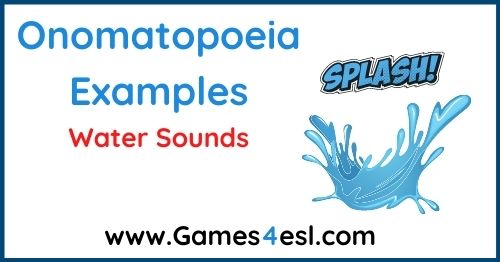
The following onomatopoeia examples are all water sounds / the sound that water makes:
- Splash – the sound of something hitting or entering water with a force.
- Dribble – the sound of liquid flowing in drops or a thin stream.
- Drip – the sound of liquid falling one drop at a time.
- Drizzle – the sound of light rain falling steadily.
- Sprinkle – the sound of small droplets or particles falling gently.
- Pitter-patter – the sound of light, rhythmic, and quick tapping, like raindrops on a surface.
- Squirt – the sound of liquid being forced out in a sudden and brief stream.
- Plop – the sound of something dropping or falling heavily into water.
- Spurt – the sound of liquid being ejected forcefully and briefly.
- Spit – the sound of forcefully expelling saliva or liquid from the mouth.
- Gush – the sound of a large amount of liquid flowing out swiftly and forcefully.
- Bubble – the sound of air or gas escaping through liquid, creating bubbles.
- Swish – the sound of water moving with a light and sweeping motion.
- Swoosh – the sound of water or a liquid rushing quickly through the air.
- Glug – the sound of liquid pouring from a bottle in intermittent gulps.
- Slosh – the sound of liquid moving around vigorously within a container.
- Lapping – the sound of water gently touching or hitting against a surface.
- Slurp – the sound of audibly and quickly ingesting or sipping a liquid.
- Trickle – the sound of a small and gentle flow of liquid.
- Whir – the sound of water or liquid moving rapidly in a circular motion.
Onomatopoeia Examples: Food and Cooking Sounds

The following onomatopoeia examples are all food/cooking sounds:
- Sizzle – The sound of food cooking in hot oil or fat, producing a distinct hissing or crackling sound.
- Pop – The Sound of a sudden burst or release, often with a short, sharp, and explosive quality.
- Crackle – The sound produced when food, particularly certain types of snacks or baked goods, is crispy and brittle, and it breaks or snaps under pressure, resulting in a series of sharp, popping sounds.
- Fizz – The sound of carbonated beverages releasing bubbles and creating a slight hissing or bubbling noise when opened or poured, often accompanied by a sensation of effervescence.
- Snap – The sharp, distinct sound that occurs when a food item, such as a crisp vegetable or a biscuit, breaks or fractures suddenly, often producing a crisp and audible cracking noise.
- Bubble – The sound and action of small air pockets rising to the surface of a liquid, typically associated with boiling or simmering. It produces a gentle, intermittent sound resembling a series of soft pops or gurgles.
- Spit – The sound made when food, especially juicy or moist food, is forcefully expelled from the mouth or when grilling or roasting meat on a spit, resulting in sizzling or crackling sounds as the fat drips onto the heat source.
- Glug – The sound produced when pouring a liquid, particularly a thick or viscous one, from a bottle or container, characterized by a deep, gurgling noise that occurs as the liquid flows out in a heavy and uneven manner.
- Crunch – The sharp, audible sound made when biting into or chewing on food with a firm or crispy texture, often associated with foods like chips, crackers, or fresh vegetables. It is a distinct sound produced by the breaking or crushing of the food item.
- Munch – The rhythmic and repetitive sound produced when eating or chewing food, typically with a slightly softer and less forceful quality compared to the crunching sound.
- Slurp – The loud, sucking sound made when drinking or consuming liquid-based foods, such as soups, noodles, or beverages.
- Clink – The metallic sound made when two utensils or glasses come into contact, often associated with toasting or stirring drinks.
- Gulp – The sound and action of swallowing a large amount of liquid or food quickly, often accompanied by a deep, audible swallowing noise.
- Chew – The sound produced by the repeated motion of the jaw and teeth breaking down food into smaller pieces, often characterized by a soft grinding or squelching sound.
Onomatopoeia Example Sentences

Here are some example sentences that can give you a better understanding of how onomatopoeia words are used in English.
- The dog barked all night.
- The mouse went squeak as it ran across the room.
- Suddenly, there was a loud thud at the door.
- The waves crashed against the side of the boat.
- The sausages are sizzling in the pan.
- The corn went pop in the microwave.
- The was a loud bang and then everything went dark.
- The audience clapped at the end of the show.
- I heard a huge roar and turned around and saw a bear.
- Water was gushing everywhere.
- The owl hooted all night.
- A loud crack came from the ice.
- Kelly’s teeth chattered as she stood out in the cold.
- A twig snapped under my feet.
- My cat purrs when I stroke it.
- Splash went the water when Chris jumped in.
- Dad burped loudly after dinner.
- The tap dripped water all night long.
- Pitter-Patter went the rain.
- The snake hissed at me as I got closer.
- Mom always hums when she is cooking.
- The tea kettle whistled loudly in the kitchen.
- Bees were buzzing in the meadow.
- The guitar strings twanged as he strummed them.
- The clock went tick-tock in the quiet room.
- There was a loud crunch as he bit into the apple.
- The thunder boomed overhead.
- Frogs croaked in the distance.
- The balloons went pop at the party.
- The phone rang in the middle of the night.
- The horse neighed as I approached it.
- Ding dong went the doorbell.
- The wood crackled in the fireplace.
- The paper rustled in the wind.
- Coins jingled in her pocket.
- The branches creaked in the wind.