
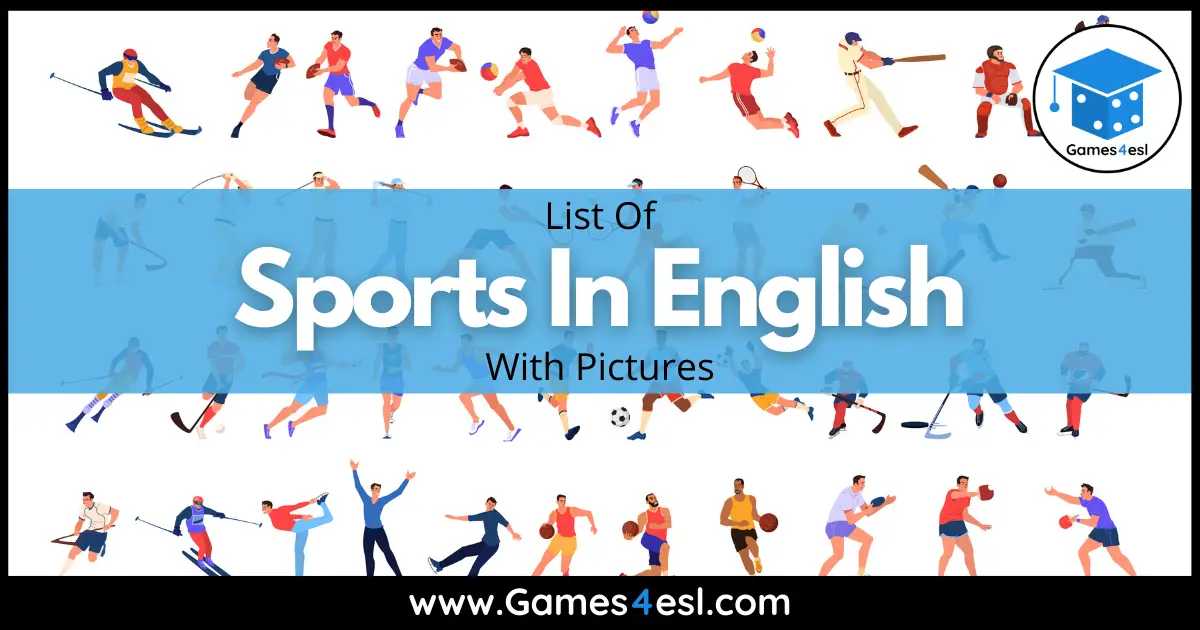
Sports Names in English – Essential Vocabulary for English Learners
Learning the names of sports in English opens up a wide range of topics students can talk about, from the sports they play and are good at to the ones they enjoy watching in their free time. To help you learn or teach these sport names, this page focuses on a selection of essential sports that beginner learners are likely to recognise and use in real conversations. In my experience, these are the sports students are usually already familiar with, which makes them easier to learn and talk about.
You’ll also find pronunciation support in the video below, along with simple explanations and examples to help learners use each word correctly. This includes common patterns such as “play,” “go,” and “do,” which are often a source of mistakes for learners when talking about sports.
Learn Sports Names in English (Pronunciation Practice)

Use the video above to introduce or review common sports vocabulary. Students can listen and repeat each word to practice pronunciation.
Common Sports Names in English
Here are some of the most common sports to start with. These are good for beginners because they’re widely recognised and often appear in ESL/EFL textbooks and beginner-level courses.
Team Sports
These are sports that are played in teams, where players work together to try to win the game.
- Badminton – A sport where players hit a shuttlecock over a net using a racquet.
- Baseball – A team sport where players hit a ball with a bat and run to score points.
- Basketball – A team sport where players try to score by throwing a ball into a hoop.
- Cricket – A bat-and-ball game where players hit the ball and run between two points to score.
- American Football – A team sport where players carry or throw an oval ball to score points by reaching the end zone.
- Ice Hockey – A fast team sport played on ice, where players use sticks to hit a puck into a goal.
- Netball – A team sport similar to basketball, where players pass the ball and shoot into a high net.
- Rugby – A physical team sport where players carry and pass an oval ball to score points.
- Soccer – Also called football in many countries, this is a team sport where players kick a ball into a goal.
- Volleyball – A team sport where players hit a ball over a net, trying to make it land on the other side.
Individual Sports
These are individual sports, where each person competes on their own rather than as part of a team.
- Tennis – Players hit a ball over a net using a racquet.
- Boxing – Two people fight using only their hands and try to score points with punches.
- Running – A sport where people run races over different distances.
- Cycling – Riding a bicycle for sport or competition.
- Swimming – Moving through water using your arms and legs.
- Golf – Players hit a ball into a hole using clubs in as few shots as possible.
- Gymnastics – A sport that involves balance, flexibility, and performing movements like jumps and flips.
- Skateboarding – Riding and doing tricks on a board with wheels.
- Skiing – Moving over snow using skis.
- Snowboarding – Riding down snowy slopes on a board.
- Ice Skating – Moving across ice using special shoes with blades.
- Surfing – Riding waves on a board in the sea.
- Diving – Jumping into water, often from a high place, sometimes with tricks.
How to Talk About Sports in English
Once students know the names of some common sports, they can start using them in simple conversations. Here are some common questions and answers you can use in class to get students talking:
What sports do you like?
→ I like basketball.
→ I like watching cricket.
What sports are you good at?
→ I’m good at soccer.
→ I’m not good at tennis.
What sports do you play?
→ I play football.
→ I play hockey at the weekends.
Do you play any sports?
→ Yes, I play tennis.
→ No, I don’t play any sports.
Using Play, Go, and Do with Sports (Common Mistakes)
One thing my students often have difficulty with is choosing correctly between play, go, and do when talking about sports, and this is a very common mistake. For example, a student might say “I do swimming on Saturdays” or “I play taekwondo.” These mistakes happen because many languages use just one verb for all sports, but in English we use different verbs depending on the type of activity.
In general, we use play with ball sports and team sports, such as play football, play tennis, or play basketball. We use go with activities that end in -ing, such as go swimming, go running, or go skiing. We use do with individual activities, especially exercise or martial arts, such as do gymnastics, do yoga, or do taekwondo.
In my experience, you can explain these rules clearly, but the best way for students to remember them is through regular practice and repetition. After introducing this language, I like to make talking about sports part of the class routine over the next few lessons, so students get plenty of opportunities to use play, go, and do in a natural way.
Sports Teaching Resources
Here are some additional resources you can use to practice and review sports vocabulary:
- Sports Worksheets – Printable activities for practicing sports vocabulary, writing, and spelling.
- Sports Quiz – A fun “What Am I?” quiz to review sports names.
- Sports Flashcards – Useful for introducing and drilling sports vocabulary in class.