
Colors Lesson Plan for ESL Kids
Teaching colors to beginner English learners helps them start describing everyday objects and builds a foundation for more complex vocabulary later on. This lesson plan uses songs, flashcards, and interactive games to make learning colors fun and memorable. The activities are designed for young ESL learners but can be easily adapted for older beginners. All the materials you need are included below, and at the end of the page, you’ll find extra games and resources for teaching colors.
Lesson Overview
- Objectives: Students will learn basic color vocabulary and practice asking and answering questions about colors.
- Key Expressions:
- “What color is it?” → “It’s red.”
- “I see something (green).”
- Who it’s for: Kids and beginner-level ESL/EFL students.
- Duration: 45–60 minutes
Introduce Colors and Warm-up
A fun way to begin a colors lesson is with a song. Music gets students moving, sets the tone for the class, and helps them remember new words. Here are two songs that work especially well for introducing colors:
- “Rainbow Colors Song” by The Singing Walrus: This song links each color to a familiar object (green frog, orange carrot, etc.). This makes it easy for children to understand and recall.
- “The Train Colors Song” by KidsTV123: A simple song that repeats basic phrases like “red train, blue train.” The fast chorus is especially fun and keeps students engaged.
Start the class by playing one of these songs and asking students to guess the lesson topic. Then, see how many color words they already know. Next, give each student a colored object such as a pencil, pen, or color card. Play the song again and tell students to stand up when they hear their color. After one round, increase the challenge by speeding up the video. Kids usually get very excited during this activity, and it works well as a warm-up before moving on to the key expressions.
Practice Color Names and Key Expressions

Use a set of color flashcards to introduce the vocabulary. Show each card, say the word clearly, and have students repeat after you. Once they are confident, ask them to say the colors without your help.
Next, play a simple memory game. Place all the flashcards on the board, then ask students to close their eyes. Remove one card and place it face down on your desk. When students open their eyes, point to the hidden card and ask, “What color is it?” Learners must try to remember which card is missing.
This game encourages students to recall the vocabulary actively and is a natural way to practice the key expression “What color is it?” To keep the activity engaging, invite the student who guesses correctly to take your place at the front and choose the next card.
Activity 1: “I See Something (Green)”
Once students know the color words, this game helps them start using the vocabulary in a communicative way while listening to and producing full sentences. Look around the classroom and choose an object. Give students a clue by saying, “I see something (green).” The class then looks around and tries to guess which object you are thinking of. When a student guesses correctly, invite them to the front to choose a new object and lead the next round.
This activity is effective because students use color words to describe real objects in the classroom, giving them natural practice with the target language.
Activity 2: Colors Board Game (Pair Work)

This board game is best played in pairs and encourages students to practice short dialogues about colors. To play, each pair needs one board and an eraser. A student places the eraser at the bottom of the page and flicks it with their finger. If the eraser lands on a color, the student asks their partner, “What color is it?” and the partner answers.
The student who flicked the eraser can then claim that space by writing their name in the hexagon. After that, it is the other student’s turn. The game continues until all spaces are taken, and the student with the most areas at the end is the winner.
Activity 3: Colors Telepathy Game
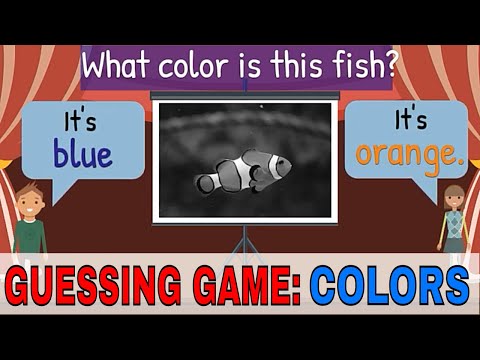
This activity is a fun guessing game in which students see a black-and-white image and must guess what color it is. There are 10 rounds, and in each round the prompt asks, “What color is it?” Students then choose between two possible answers. You can play this as a whole class and have students call out their guesses, or use this answer sheet and ask them to circle the color they think is correct.
Review and Check Understanding
To wrap up the lesson, line the students up in pairs at the door. Show a color flashcard to the first pair. One student asks, “What color is it?” and the other answers. Then they switch roles. Once both students have asked and answered correctly, they can leave, and it is the next pair’s turn.
This quick review gives every student one last chance to use the target language before the class ends. It also allows you to see which students are confident and which might need more support in the next lesson.