
Feelings and Emotions Lesson Plan
This lesson plan helps beginner students learn feelings and emotions vocabulary and practice asking and answering “How are you?”. Students will learn common words such as happy, sad, angry, and tired through flashcards, games, and speaking activities.
Lesson Summary
- Level: Beginner (A1)
- Age: Kids
- Time: 40 minutes
- Lesson Topic: Feelings and Emotions
- Grammar Focus: How are you? / I’m happy.
- Materials: Flashcards, worksheet, guessing game video
Warm-up Activity: Guess the Feeling
I always start my feelings lesson with a fun warm-up activity. Students may already know some feelings in English, and this first activity helps me see which words they already know while activating their existing knowledge of feelings vocabulary.
Start by drawing a big circle on the board and then slowly add a nose, eyes, and other features of a face. As you are drawing, encourage students to guess what it is. Once students have guessed that you are drawing a face, draw a big smile and ask students to make the same expression. Say “happy” out loud and ask students to repeat after you. Next, erase the smile and replace it with a frown. Ask students to make the same face and elicit the word “sad” from students.
Continue with other feelings such as angry, hungry, and thirsty, and see how many feelings students already know. Next, it’s time to introduce the key vocabulary and expressions for the lesson.
Teach Key Vocabulary and Expressions
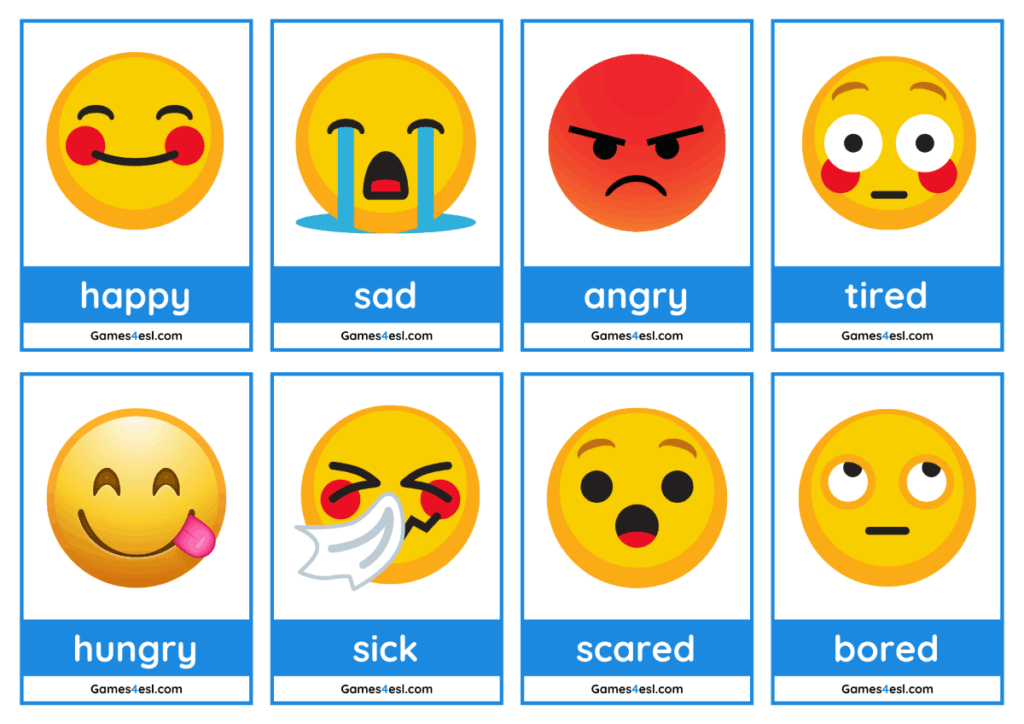
Use these feelings flashcards to introduce common feelings and emotions vocabulary. Hold up each flashcard, say the feeling out loud, and ask students to repeat after you. Next, have students say each of the feelings on their own. Once students are confident with the vocabulary, introduce the question “How are you?” and the answer pattern “I’m happy.”
A great way to practice this is to ask the whole class to ask you “How are you?” and then answer by choosing a feelings flashcard at random and acting out that emotion. Once students understand the activity, invite some students to the front and have them choose a flashcard each. Then have the whole class ask them “How are you?” and the students can answer while acting out the feeling on their flashcard.
Play the Feelings Guessing Game
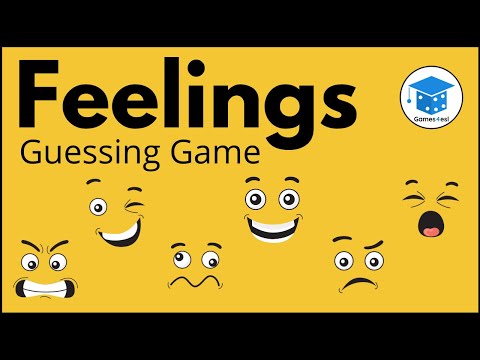
Now that students have practiced asking and answering “How are you?”, it’s time for a fun guessing game. In this Feelings Guessing Game, students see a blank emoticon face and are asked questions such as “Are you happy?” They must guess the feeling by answering “Yes, I am.” or “No, I’m not.” before the full face is revealed. When I play this game, I usually encourage kids to show their guess by making a circle with their arms for “Yes, I am.” or an X with their arms for “No, I’m not.” This makes the game much more active and helps keep young learners engaged throughout the lesson.
Complete a Feelings Worksheet
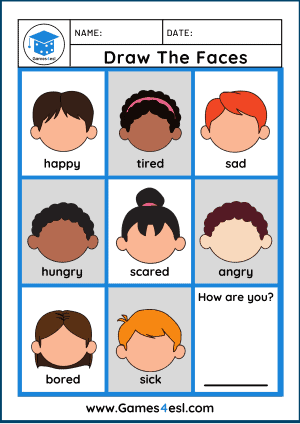
Next, it’s time to reinforce what students have learned with this feelings worksheet. On the worksheet, students will see 8 blank faces with different feelings and emotions written below. They must read each word and draw the matching facial expression on the blank face. You can find more free feelings worksheets here.
If this is your students’ first time learning feelings and emotions vocabulary, it’s a good idea to read each word together as a class before they begin. While students are completing the worksheet, it’s also a good opportunity to walk around the classroom and ask individual students “How are you?” This helps you check understanding and quickly see which students may need a little more support or extra practice.
Review Activity: Ball Toss
Finally, it’s time to wrap up the lesson with a fun review activity. First, use the printable flashcards from earlier in the lesson to quickly review the key feelings vocabulary and expressions.
Then, using a soft ball, toss the ball to one student and ask, “How are you?” That student should answer using a full sentence, such as “I’m happy.” They should then toss the ball to another student and ask the same question. Continue until all students have had a chance to answer and review the target language.
Additional Feelings and Emotions Resources
Here are some more useful resources for teaching feelings and emotions not used in this lesson plan. As always, these are free to use in your class.
- Feelings PowerPoint
- Feelings Worksheets
- List Of Feelings And Emotions In English
- Feelings and Emotions Quiz
- Feelings Vocabulary Exercises